Landscape Replacements: This part of my website houses the big boys… the largest scale projects I take on. This is where you can see an entire property transform from the old to the new! If you’re in need of a total front and/or backyard reset, because things just look so bad, or you want to get with the times and do a native perennial landscape on drip irrigation, I’d love to collaborate with you! We can spare no expense; get a lab soil test, draft a design, rip everything up and buy the best of the best of every class of walkway and irrigation technology and plant material… or approach it as economically as possible, and have me advise on how you can participate in the process and take on parts of the work, and how we can address the various components of irrigation and material acquisition. Maybe you have some plants you can propagate already, access to a pile of mulch? There’s a sliding scale to this kind of thing, so rest assured there’s a way forward to achieve a beautiful landscape you can enjoy!
Front Yard: Turf-to-Perennials
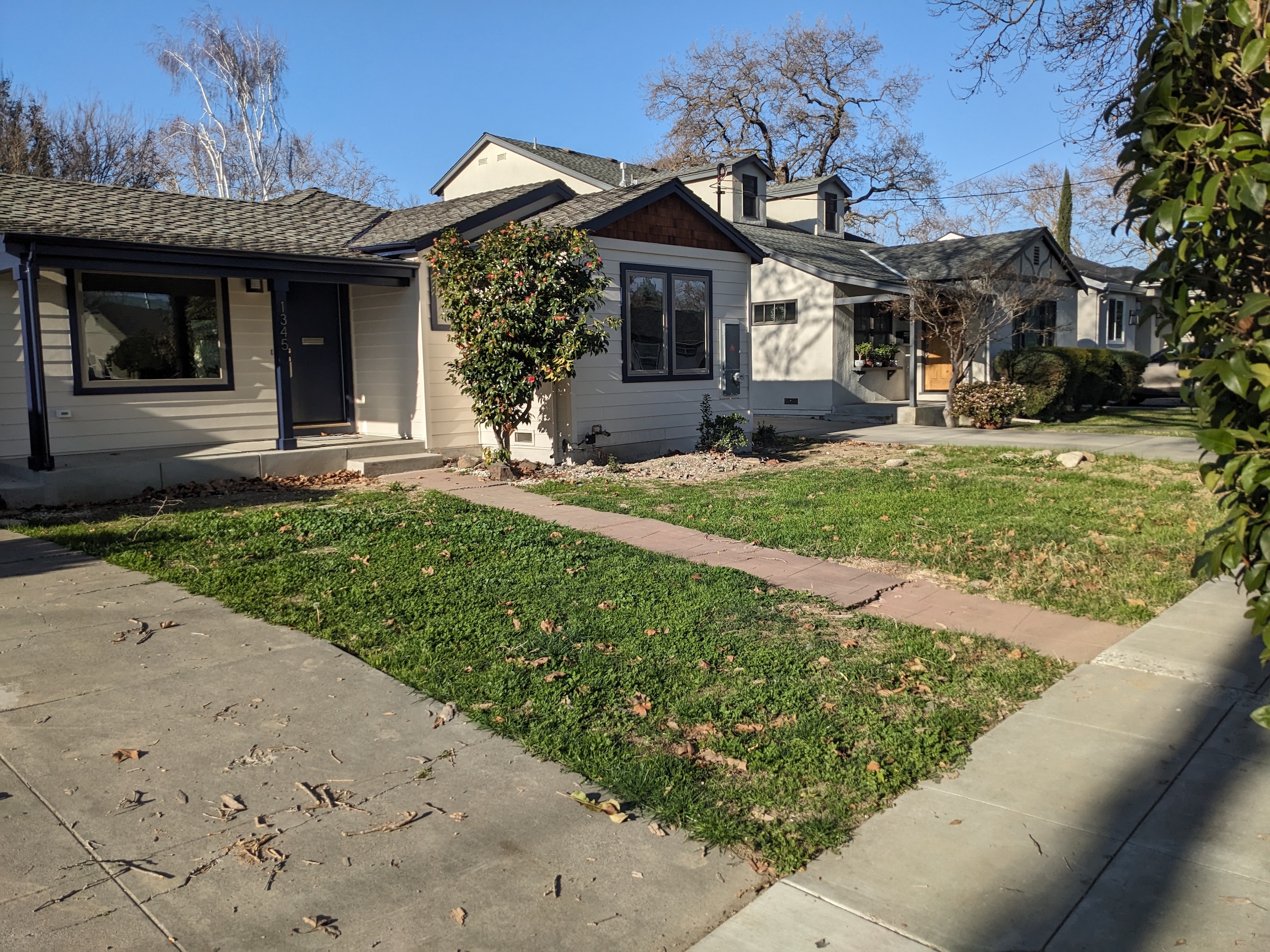
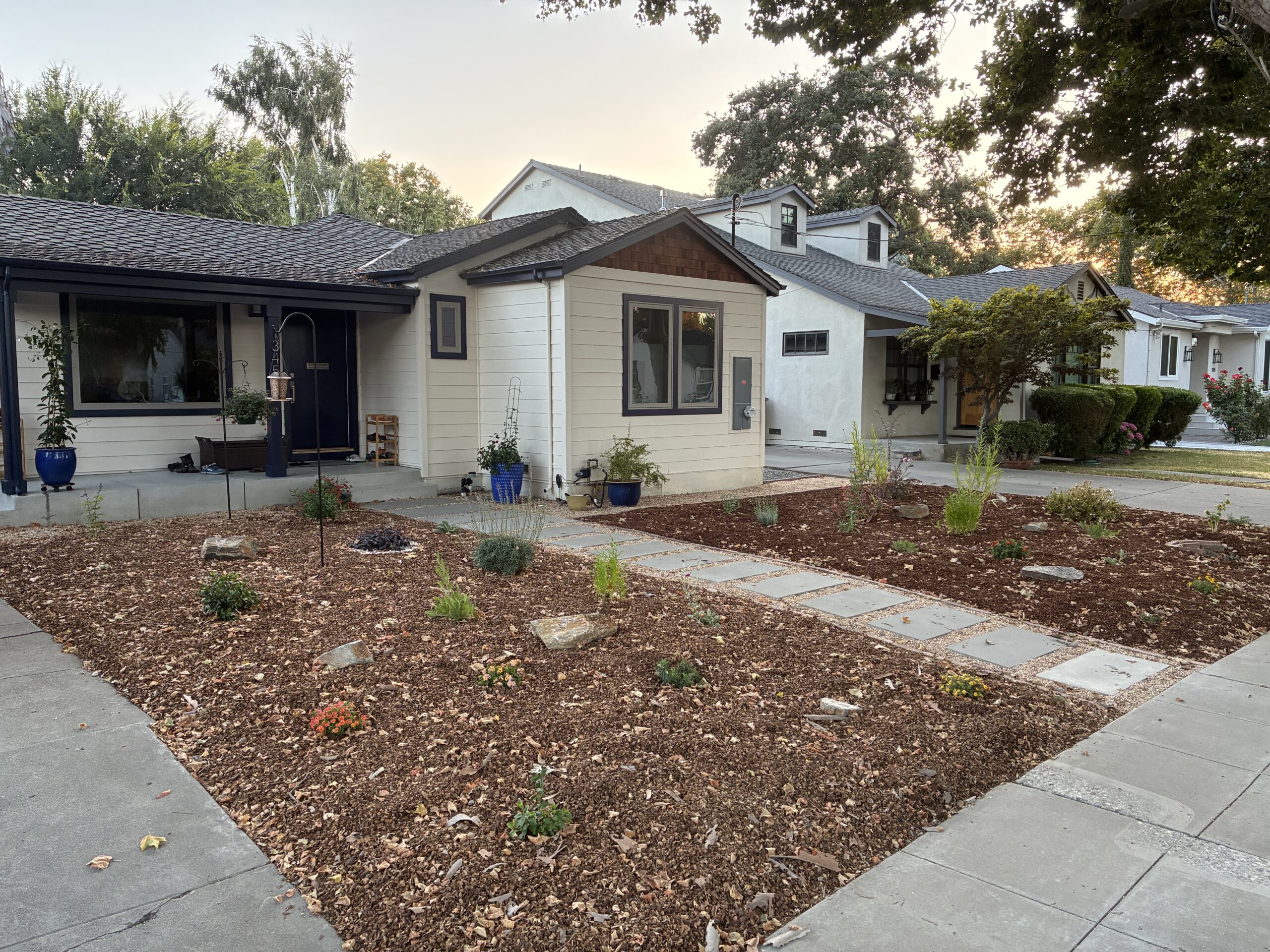
This is a case of sparing no expense, paired with a little bit of resourcefulness. Initially, I started this project remotely (I was still living in Chico and traveling to the area every other weekend before I moved down), and so I had an opportunity to shuttle some mulch and plant materials down and remove some plants and structures before things really got rolling. I staged a few truck beds of almond shell on the driveway, which ended up covering one side of the walkway, and it paired well with the mini fir bark we used to finish the other side. We used large sheets of cardboard (another freebie material) to suppress weeds to great effect; I can still count the number of weeds I’ve pulled since installation on both hands, so the smaller plants will grow into their larger selves for a few growth cycles without competition while the cardboard breaks down. I dug up a bunch of volunteers of various perennials from one of my master gardener clients from Butte county, and we ended up using a lot of those to fill a respectable amount of space. We sourced the brick border for free from the back yard, and rocks for gutter drainage.
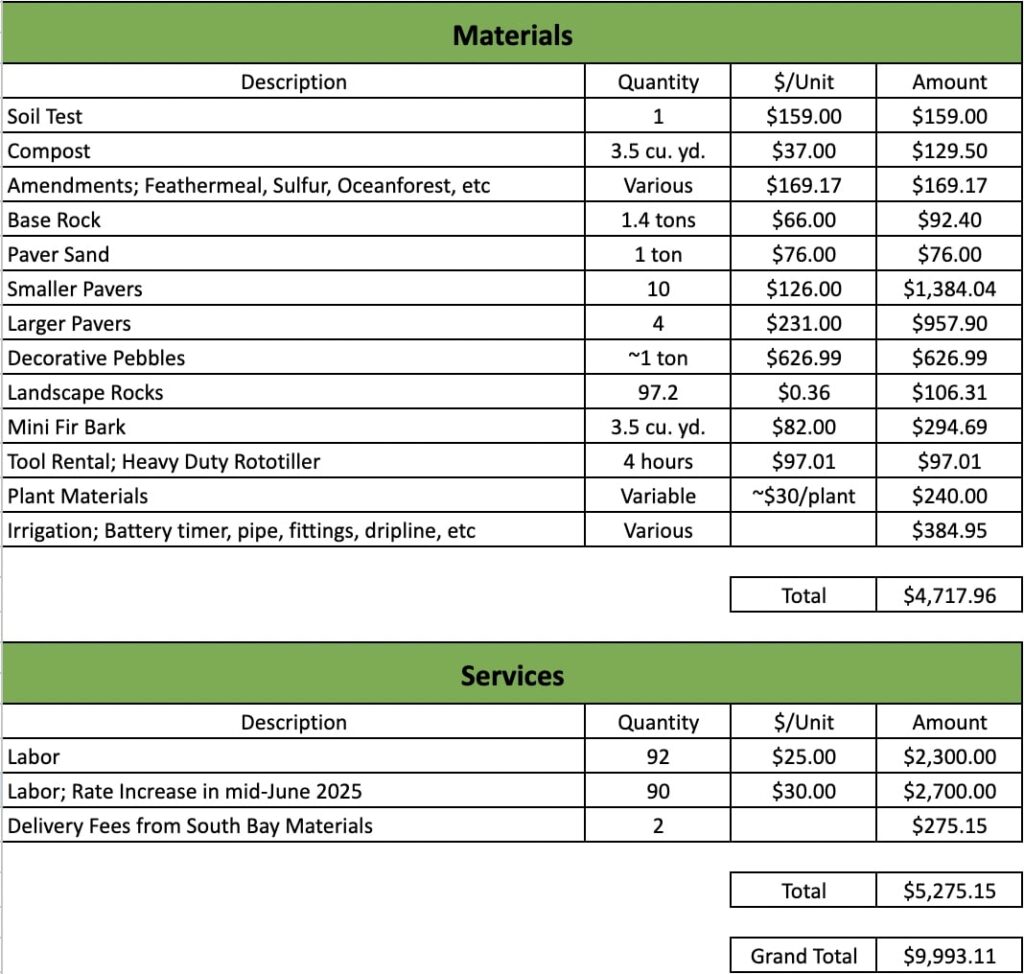
Otherwise, modest expenses were the compost and various planting amendment (both to follow pH adjustments from a lab soil test and to correct nutrient deficiencies), mini fir bark, base rock and sand for the walkway, other plant materials bought from local nurseries, and a handful of landscape rocks for lizards and salamanders to have refuge in. What might be considered more extravagant expenditures would be the pavers for the walkway and the decorative pebbles that filled in around those pavers and in front of the porch and front bedroom, so those are definitely expenses that could be cut back in another similar yard footprint.
Overall, all of the plants have established themselves since completing this project in July 2025, and the bird feeder and various pollinator friendly species attract plenty of entertainment from the avian locals. So, you can refer to the invoice as a framework for a project. To be sure, a lot of things could be cut down significantly or removed; to do just purely a large garden would be significantly cheaper, as there would be less nuts and bolts of delivering bulk materials and heavy items like pavers.
Tiny House: Turf-to-Permaculture Garden (IN PROGRESS; SOIL CONDITIONING OVER WINTER)
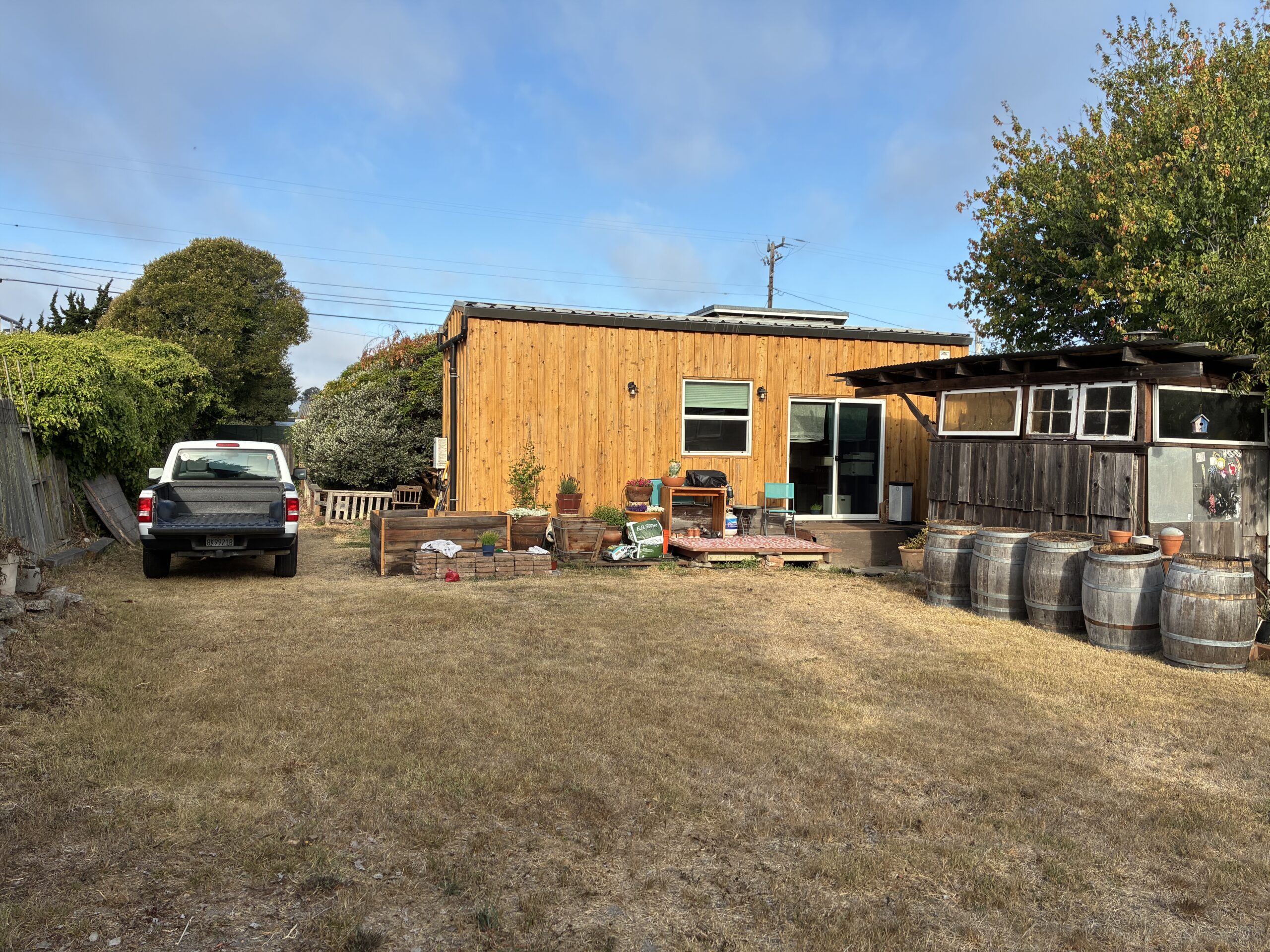
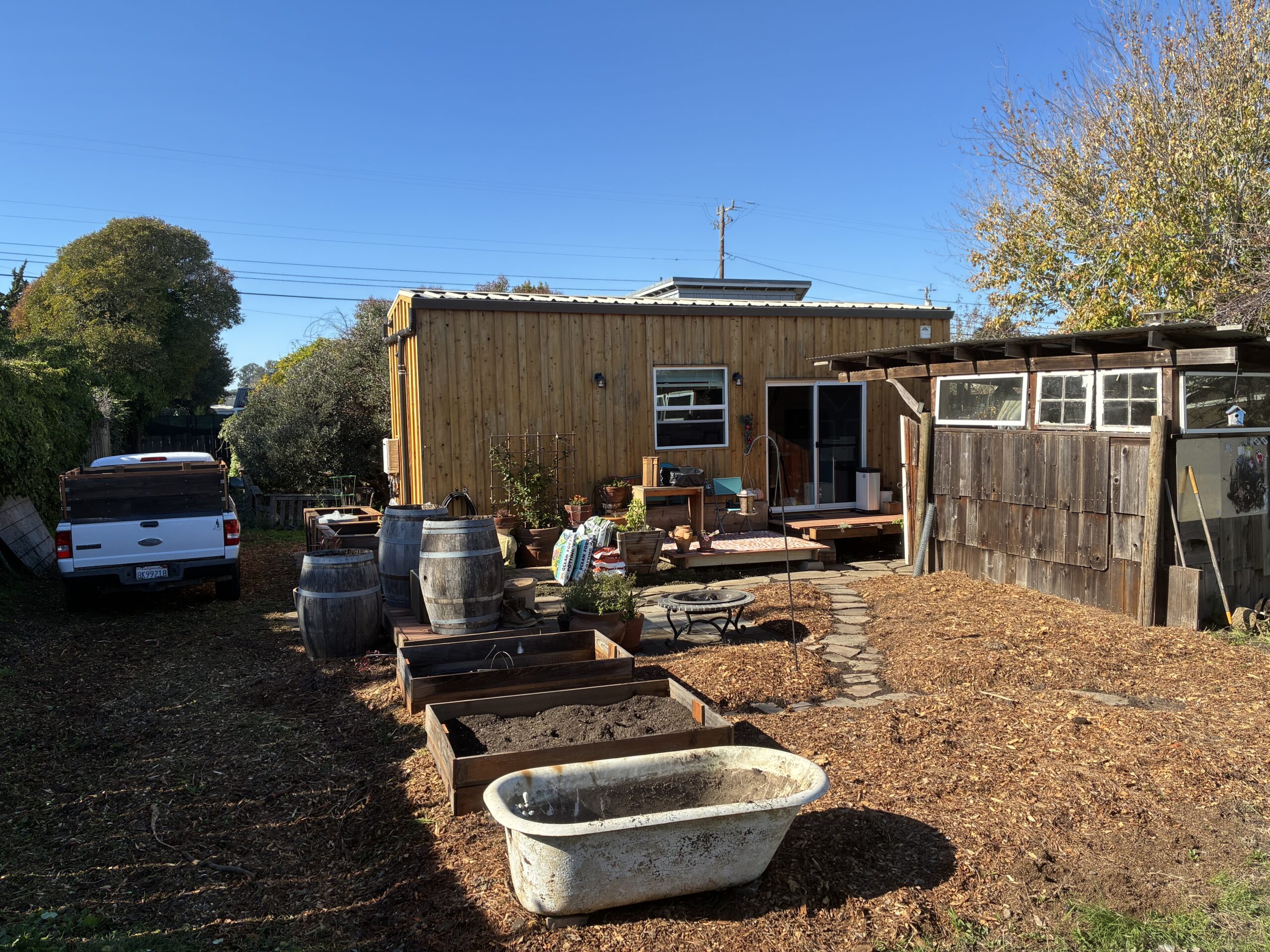
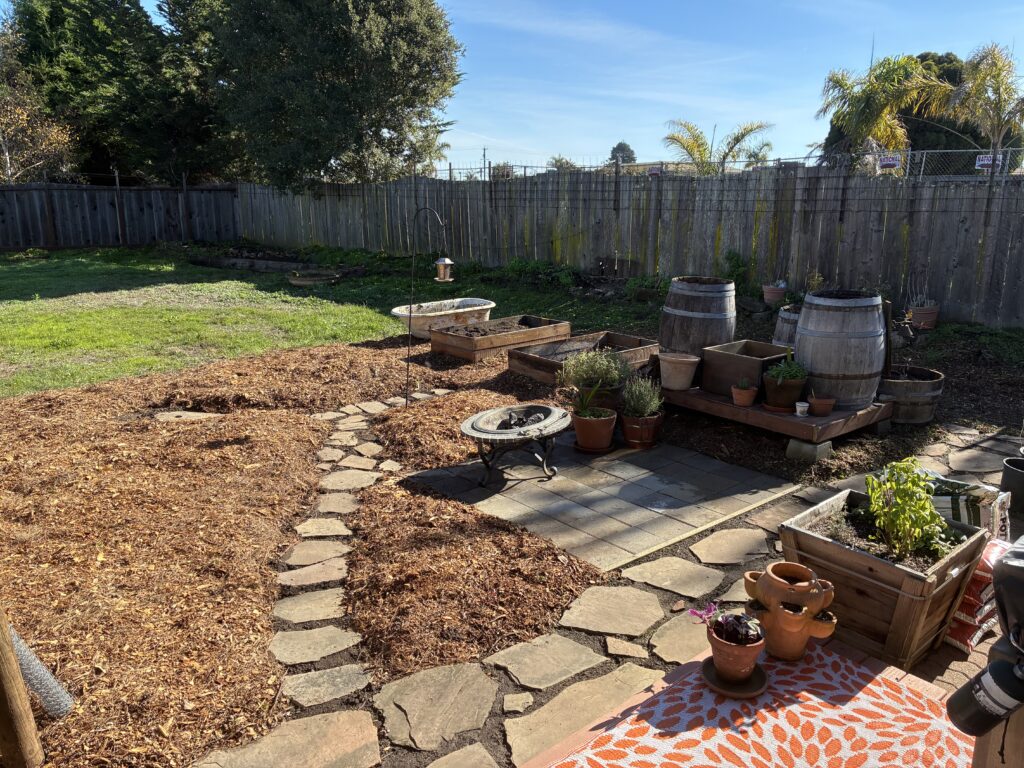
I moved from Chico into a tiny house in the middle of Santa Cruz, but lo and behold what I *actually* moved into was a permaculture wet dream. I quickly assessed the situation, and came to the fast conclusion that I had a blank canvas with a huge array of materials on site; lumber, composite decking, flagstone, masonry, and some interesting odds and ends such as a clawfoot bathtub and a giant bird bath. I also acquired several wine barrels for free, along with some other random items. So, while reading Gaia’s Garden, the permaculture bible, I set to work putting all of this free material together…
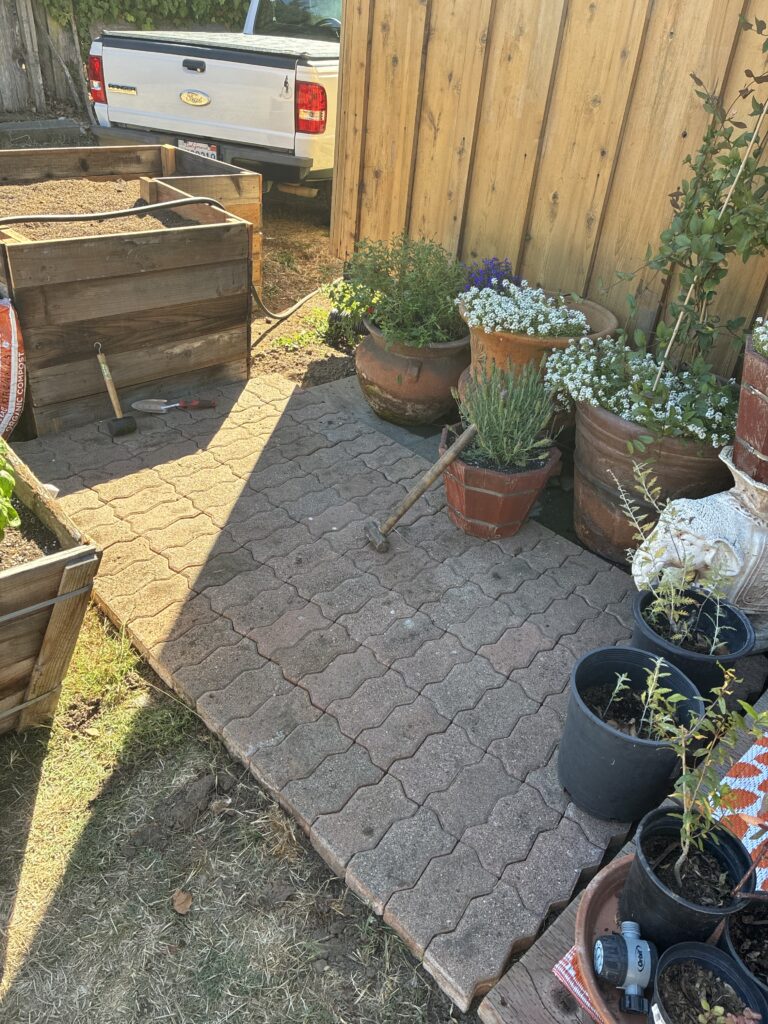
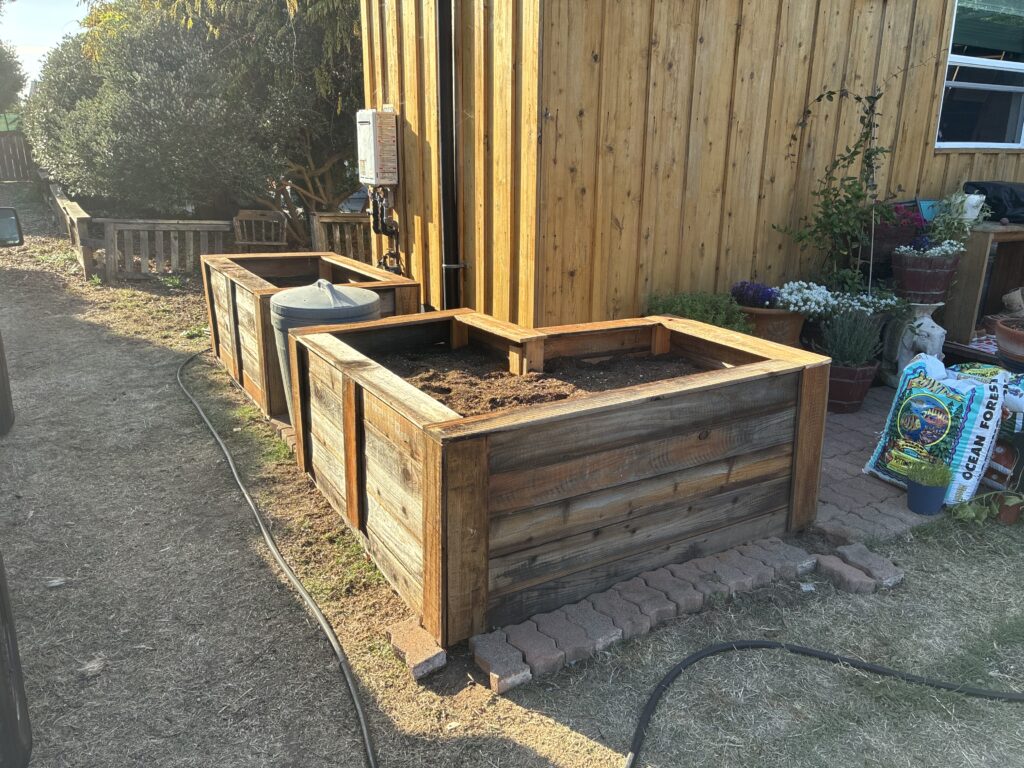
I knew I wanted a main pathway between the shed and my pickup, as I haul equipment and materials back and forth quite regularly, so that became my main conduit. I branched some elements off of this pathway; a secondary path, ornamental beds, and a fire pit patio. I enclosed all of this in with a south-facing wall of edible landscape features (four raised beds, a citrus platform, and a berry bush clawfoot tub), in order to create a microclimate, add shade to the fire pit patio, form a partition from the driveway, and line up the food production items with the path of least resistance for drip irrigation. I also rebuilt two of the three decks and replaced the lowest deck with a brick plant patio. A worm bin, Bokashi bucket, and leaf compost bin, all strategically placed, will also honor the permaculture principle of reducing waste and increasing organic matter content of the soil.
Currently, the ornamental beds are undergoing a sheet mulching formula over the winter to boost organic matter in the soil and tweak the high sand composition of the soil structure. I spread a few cubic yards of free horse manure over the entire area, amended with feather meal and sulfur, and covered all of this in cardboard and free mulch. My plant legend and scheme can be viewed below, but basically it will be a small shrub and perennial garden to attract a large array of pollinators and add color to the landscape. I also constructed a trellis against the brown canvas of the shed for a vine. Weed management was also on my mind as I designed things; I’ll flame the hardscape elements and hula ho and handpull the mulched areas for easy-enough management, and as the plants grow in they will compete with the weeds.
Overall, I did virtually all of this “for free;” I simply up-cycled what was already there and threw it all together into a cohesive multi-dimensional permaculture garden. The only things I’ll have paid for will be the plant materials, two boxes of amendment, and gopher wire and baskets. So this project serves as a strong example of what can be done on the cheap, if only you need my labor to make it all happen. I would estimate this to be somewhere in the ballpark of $2,000-$3,000 of my labor (and transporting free materials such as compost and mulch) to make something like this happen, and probably another $500 for gopher wire and baskets and 25ish 1 gallon plants.