I take being a solo-garden-preneur seriously. Subsequently, the garden construction services I offer tend to be either small or medium scale. As hardworking as I am, I still am just one man, and am therefore not going to feasibly install an intricate 1000 square foot patio with fountain features and surrounded by 100 foot retaining wall garden beds by myself. Those projects are more suited to large crews of guys, where the work dynamics and use of heavy equipment are highly interrelated to each other. You’re on my website, and so I take it you’re more interested in feeling comfortable in working with one trustworthy person who wants to collaborate with you on some small or big-ish garden project.
So, this page demonstrates some scale of how a day or a multi-day project might look with me. It’s hard to dive into the weeds of the beginning-to-end details of garden design, especially if you have a sizable front or backyard that is calling for a full restoration… but I hope the following provides some kind of framework for cost, labor, and process.
Consultation: Data Gathering, Testing, & Design
I’ve spent a lot of time in people’s gardens. I have a modest amount of experience with seeing what works and what doesn’t, what goes well together and why, what you can get away with, and so forth. At this point in my experience and education, I’m a firm believer in starting with gathering some cold, hard facts about your potential garden. Below are a list of different areas where I can assess and synthesize different components to ensure a successful project:
Soil Testing: I’ve taken a soil science course, and have learned how to test for different types of soil variables such as pH, salinity, composition, drainage, and water holding capacity. Knowing what is happening (or not happening) below the surface is arguably one of the most critical aspects to successful gardening. I have paid for lab tests in the past, but now that I have this knowledge under my belt, I can just conduct these assessments on my own (with the help of my personal lab kit).
Irrigation Design: I’ve also taken an irrigation design course, so I have a decent understanding of how to approach building an automated watering system. I specialize more in constructing drip irrigation systems, as I’m a believer in maximizing water efficiency.
Garden Design: Some of my other classes (permaculture design, various plant material classes) and master gardener clients over the years have molded my instincts when it comes to deciding on how to meld plants and space and sun aspect and and whatever other elements need to be considered in order to achieve harmony.
Plant Selection: I pay for a subscription to Plantmaster, so I am able to greatly expedite the process of picking plants. We can quickly drum up a list of plants that are only drought tolerant CA natives, or whatever specialized ornamental scheme you are seeking, along with useful reports that show bloom times and color.
So, depending on how much data we need to gather to ensure a successful outcome, it just comes down to my time, in terms of cost. Overall, to hire for individual aspects for each of these elements, other professional entities would, by comparison, be much more expensive than me.
Keith's "Ford Ranger Small Garden" Special!
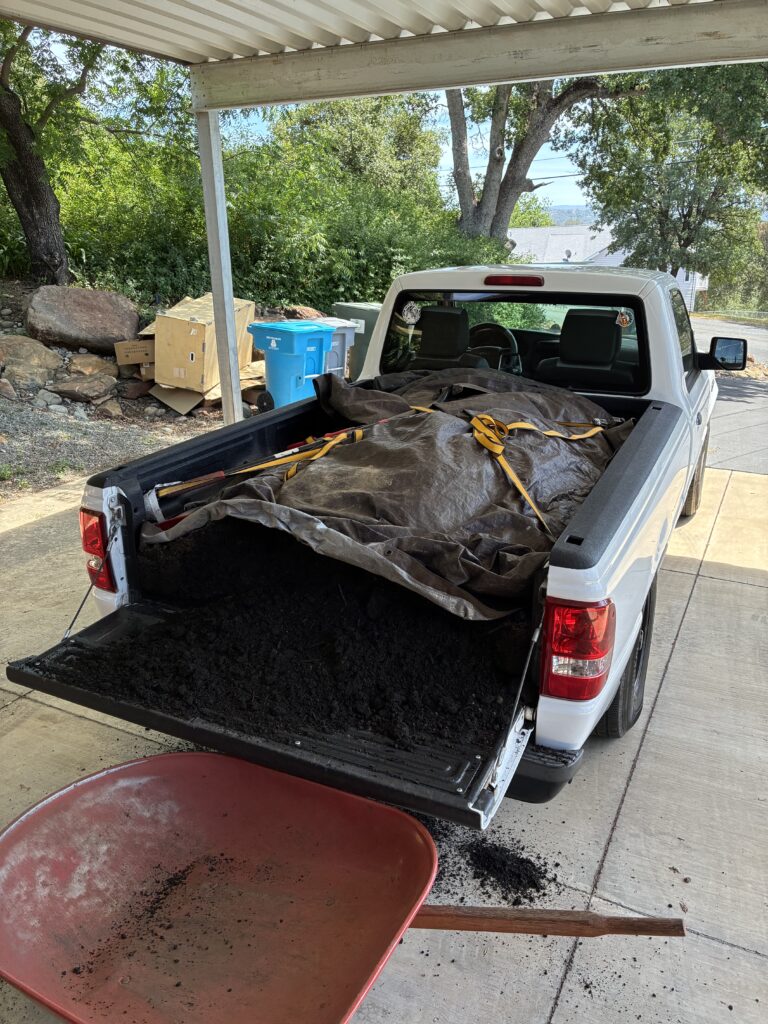
This is my “small-scale” garden construction or replacement service! Basically, it is meant to result in a 250ish square foot garden (larger or smaller depending on variables) in one or two material delivery trips with my pickup (which I have walls for); I fill the bed with a couple cubic yards of mulch or garden soil, throw a tarp over that, my tools and amendments on top, plant materials and drip irrigation in the cab (or I can bring many plants with my walled in truck bed), and I jet on over and install everything on the same day. If you have a side yard, an unused retaining wall garden, or some other small unused patch of dirt, this service is meant to renovate those small areas… all in a days work!
This can be an economically friendly option for everybody. The costs of my labor, one or two cubic yards of soil and mulch, amendments, a handful of plants we decide upon together, and a basic automated irrigation system (if no irrigation system exists to patch in to) can all be done within the ballpark of $500-$1000.
Medium-Scale Replacement
As you might imagine, costs rise as scale rises… sort of. It really depends on how far you want to go and how resourceful you can be. There are ways to source some materials for free; you can propagate your own plants via seeds or cuttings, use cardboard as a weed barrier, call around to tree companies and get a giant pile of mulch delivered (as long as you’re okay with not having a choice in the matter!). You can be willing to start small with nursery plants (a 1 gallon vs a 5+ gallon is a big price difference!). You can compost. You can participate in the work process. At the end of the day, I’m just trying to spread the garden gospel, and either to help create gardens or to do the whole project myself.
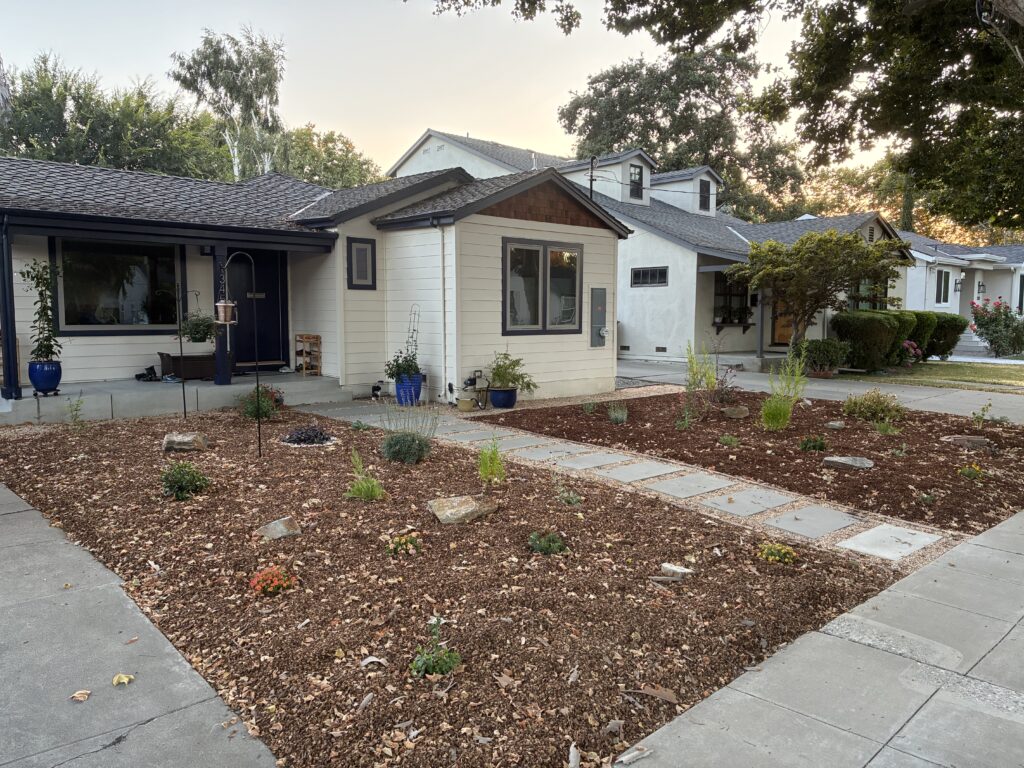
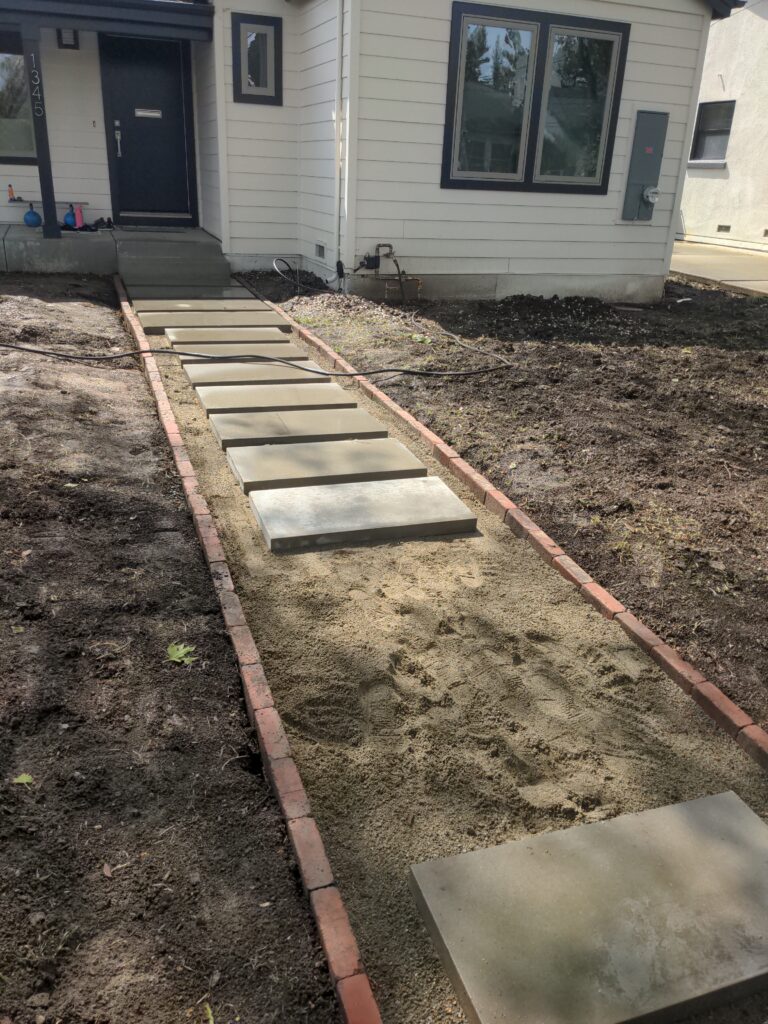
Take the pictured project below (also broken down in my work portfolio under “Total Restoration”). That’s almost a 10 grand front yard for materials and labor… but you cut that down significantly (maybe half) if you keep the old pathway and just mulch the entire thing and discard the decorative rock, because you greatly reduce time and money involved. The pathway and pebble was expensive for me to do; the materials alone were a few thousand to purchase and deliver. It looks amazing, but for me to install all of it took a lot of time, effort, and money. You axe that, the whole thing becomes significantly less in pricing. So, in a sense, you get what you pay for… but there’s also great latitude in the pricing scale.